
Togas in the Roman Senate
You picture every Roman senator draped in a toga, debating Rome’s fate. But most sessions looked far less elegant.
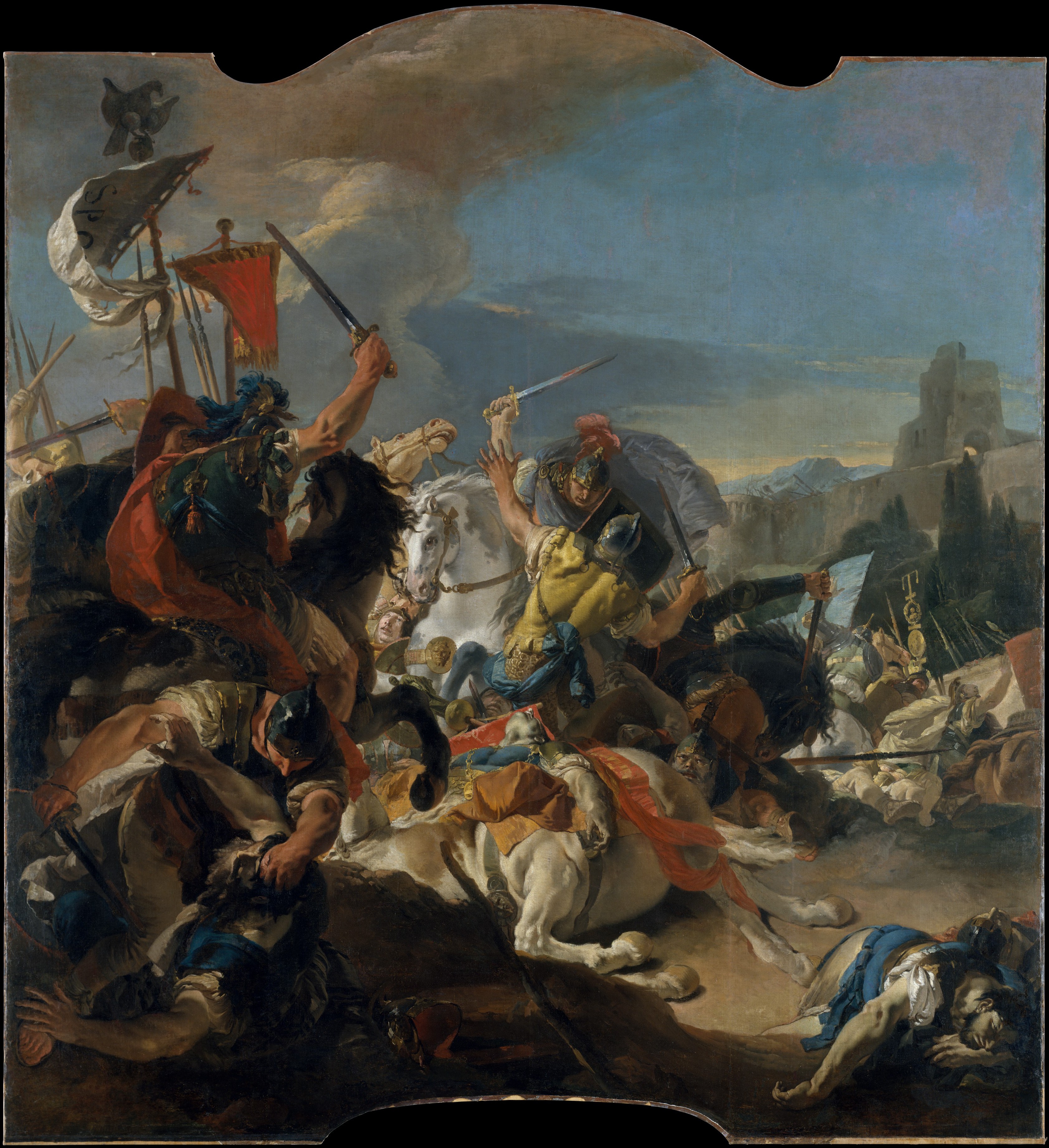
Giovanni Battista Tiepolo — "The Battle of Vercellae" (1725–29), public domain
The toga-and-senate myth.
Every movie puts senators in togas, gesturing grandly as they decide life and death. You see miles of white wool, draped and immaculate, on every ancient statesman. It’s the number one Roman style cliché.
Tunics ruled the Senate.
Ancient sources and reliefs show that the day-to-day dress code was the simple tunic—belted, easy to move in, and much cooler in Rome’s stuffy Curia. The toga was stiff, hot, and expensive, reserved for processions and certain official ceremonies. Cicero, when arguing for his life in the Senate, would have done it in something far plainer.
Blame Renaissance painters.
That endless toga look comes from Renaissance and neoclassical art, not archaeology. Painters wanted their Romans to look noble—so they painted what they thought looked best: pure white togas on every head of state.
Senators usually wore a plain tunic in the Senate. The formal white toga was for public processions, not day-to-day political work.
